
- Home
- Floor Drains
- Selection Choices
Floor drain, trench drain or slot drain: how to choose
Three drain systems are used in commercial and industrial food processing, and most plants use more than one. This guide explains what each does best, the questions that decide it, and what to send us for a quote.

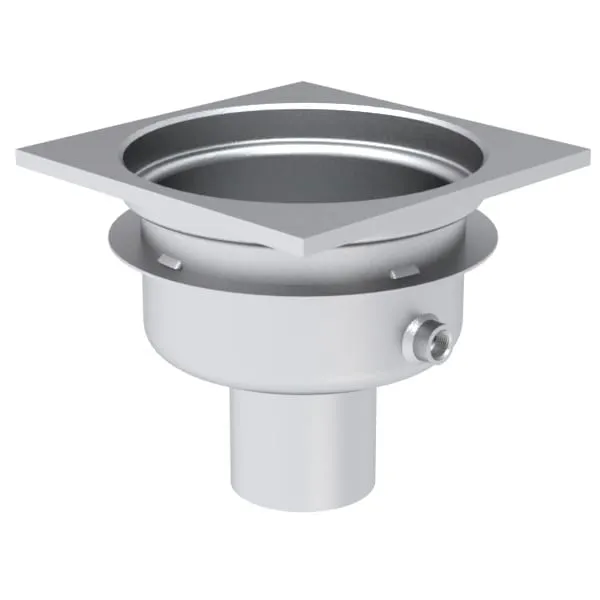
- Drains to a single point
- Larger rooms need several drains
- Many cover and basket options
- Fastest to ship: 12" drains are stocked
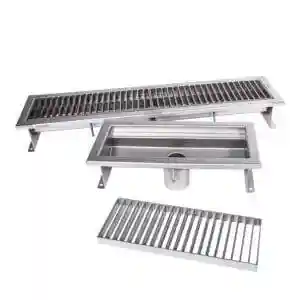
- Collects water along a line
- Handles heavy wash-down flow and debris
- Bar grate or solid plate for forklift traffic
- Grates take time to pull and sanitize
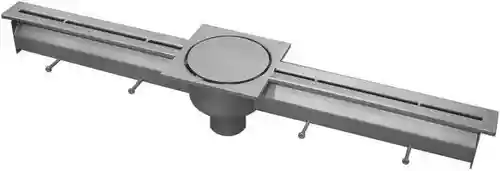
- Trench channel without heavy grates
- Pre-sloped, easy to clean
- Suits clean-in-place (CIP) and auto-flush
- Built to your layout
Side-by-side comparison
| Floor (area) drain | Open trench drain | Slot drain | |
|---|---|---|---|
| Collects water | At one point | Along a line | Along a line |
| Floor slope | Toward the drain from all sides | One direction, toward the trench | One direction, toward the slot |
| Flow and debris | Light to moderate; basket catches solids | Heavy wash-down flow and solids | Heavy flow; solids go to the sump basket |
| Cleaning | Lift the cover, empty the basket | Pull grates, clean channel and grates | No grates; brush or flush the channel |
| Traffic | Covers rated to 12,500 lb | Bar grate or solid plate for forklifts | Narrow opening, nothing to lift |
| Lead time | Stocked 12" drains, usually ship in 24–48 hours | Pre-fab 6" trenches fast; standard designs 2–5 weeks | Custom to your layout; 4–8 weeks after drawings |
When a floor drain is the right choice
A floor drain, also called an area, point or pot drain, is the simplest system. It works well in coolers, corridors, restrooms, equipment rooms and smaller wash-down areas where water reaches the floor in a predictable place.
- Cost and speed: our 12" square and round drains are stocked with 3", 4" and 6" outlets.
- Many options: deep sump, low profile, side outlet, trap primer and membrane clamp bodies, with nine cover styles and several basket options.
- The trade-off: the floor must slope to each drain from every side, so large rooms need several drains and more careful concrete work.
When to use a trench drain
An open channel trench collects water along its full length, so the floor only slopes one way. That makes trenches the usual choice along processing lines, in wash-down areas that see high flows, and across doorways and forklift aisles.
- High volume: food plants often run 100+ GPM during wash-down, and a trench can take surge flows without backing up.
- Debris: the channel carries solids to a sump basket instead of letting them sit on the floor.
- Heavy traffic: bar grates or a solid plate with perimeter drainage stand up to forklifts and pallet jacks.
- The trade-off: grates are heavy and take time to pull and sanitize.
Our trenches are formed from 12 GA stainless, typically 4"–12" wide, and pre-sloped. Need one fast? Pre-fab 6" trenches come in 4, 6, 8 and 10 ft lengths.
When to use a slot drain
A slot drain is a trench channel with a narrow opening instead of a grate. Nothing has to be lifted to clean it, which is why slot drains are popular in plants that sanitize daily.
- Sanitation: no grates to pull, fewer places for residue, and it suits clean-in-place (CIP) systems with auto-flush channels.
- Built-in slope: 1/8" to 1/4" per foot, formed into the 12 GA body.
- Layout freedom: straight runs, 90° intersections, angled sections and several runs meeting at one sump.
- Retrofits: works well in existing winery and brewery floors that need better drainage.
Five questions that decide it
- How much water hits the floor, and where? Steady, spread-out wash-down flow points to trench or slot drains. Occasional water in one spot points to floor drains.
- What goes down the drain? Meat, poultry and produce plants send solids with the water: plan baskets and sumps sized for it.
- What drives over it? Forklift aisles need bar grate or solid plate trench, or forklift-rated floor drain covers.
- How often is it cleaned? Daily sanitation favors slot drains and floor drains with easy-lift covers; heavy grates add labor every shift.
- New floor or existing floor? A new pour can be sloped to suit any system. In an existing slab, a slot drain or trench usually needs less re-sloping than adding point drains.
Most plants use all three
A typical layout: trench or slot drains along processing lines and wash-down areas, floor drains in coolers, corridors and equipment rooms, floor sinks under equipment with indirect waste, plus cleanouts and P-traps to match. All of it in T304 stainless, or 316L where chemicals are aggressive.
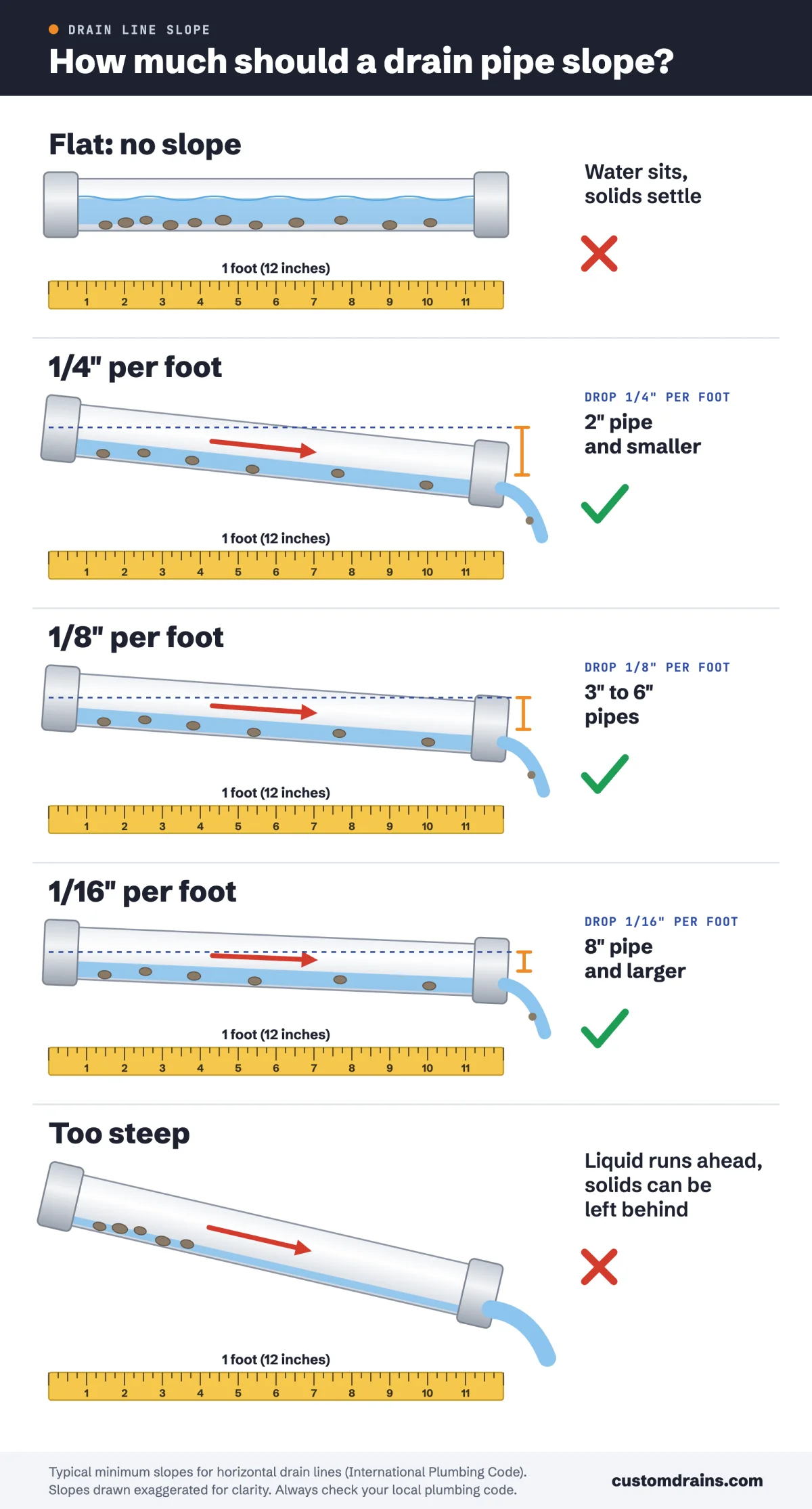
How much should a drain line slope?
Whichever system you choose, the drain line from each drain, trench or sump has to fall steadily to the sewer.
| Pipe size | Minimum slope |
|---|---|
| 2" and smaller | 1/4" per foot |
| 3" to 6" | 1/8" per foot |
| 8" and larger | 1/16" per foot |
Minimums for horizontal drain lines under the International Plumbing Code. A flat line lets water sit and solids settle; a very steep one lets liquid run ahead of the solids. Some states follow the Uniform Plumbing Code instead, so always check your local code.
What to send us for a quote
- Floor plan with equipment lines, doors and traffic routes
- Expected wash-down flow, or the number of hoses running at once
- New construction or retrofit, and the slab thickness
- Outlet sizes and pipe connection, if already decided
- Grade: T304 or 316L
Rough numbers are fine. We'll recommend the mix of drains and send detail drawings with the quote.
Common questions
What is the difference between a floor drain and a trench drain?
A floor drain (area or point drain) collects water at one spot, so the floor has to slope toward it from every side. A trench drain collects water along a line, so the floor only has to slope in one direction, toward the trench. Trenches handle more water and debris; floor drains are simpler, cheaper and faster to get.
Is a slot drain better than a trench drain?
Neither is better everywhere. A slot drain has no grates to lift, so it is quicker to clean and suits food plants with frequent sanitation. An open trench with bar grates collects more debris, is easier to reach into and is the usual choice where pallets and forklifts cross the drain all day.
How many floor drains does a room need?
It depends on the floor area, how much water hits the floor during wash-down and how far water can travel before it pools. Your plumbing engineer and local code set the number and spacing. Send us the floor plan and expected flow and we'll suggest drain locations and outlet sizes.
Can I mix floor drains, trench and slot drains in one building?
Yes, and most food plants do: trench or slot drains along processing lines and wash-down areas, floor drains in coolers, corridors and equipment rooms, and floor sinks under equipment that discharges indirect waste.
Which stainless steel should I choose, 304 or 316?
T304 is the standard for food, beverage and dairy plants. Choose 316L where floors see strong acids, chlorides, brine or aggressive cleaning chemicals. All of our drains come in either.
Stocked floor drain styles




Still deciding?
Describe your floor, flow and traffic — we'll recommend the right mix of area, trench and slot drains.