
- Home
- Accessories
- P-Traps
Stainless steel P-traps
Water seals in a P-trap keep toxic sewer gases out of your processing rooms. Stocked in 2", 3", 4" and 6" (8"+ options), in T304 or 316 stainless.

Built for food, beverage & dairy
- Stocked sizes
- 2" · 3" · 4" · 6" (8"+ options)
- Material
- T304 / 316 stainless steel
- Pipe
- Sch 10 (std) or Sch 40
- Welds
- Continuous — no pits, cracks or holes
- Finish
- All burrs and sharp edges removed
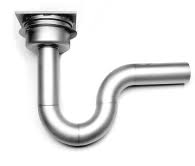
P-traps welded on drains
Floor drain and P-trap welded into one assembly — also available with a built-in cleanout tube, as shown.
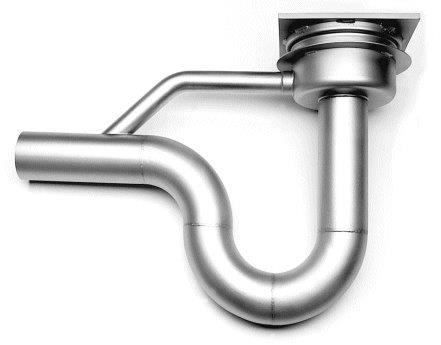


- Schedule 10 elbows and pipe
- 2" tube cleanout from drain to discharge
- 1 1/2" internal plug in drain to prevent backflow
- 12 gauge concrete ring
We can custom make to your specifications. We highly recommend P-traps on all types of drains — wastewater management is critical in the food, beverage and dairy industry. Stainless drains are recognized as safe for food processing worldwide.
P-trap questions
Do drains need a P-trap?
Yes. A P-trap prevents sewer gases from entering processing rooms by maintaining a water seal. It also helps manage drainage and prevent clogs.
What are signs a trap needs attention?
Persistent foul odors, slow drainage and frequent clogs can indicate blockages, or that the trap needs maintenance or replacement.
Why do foul odors matter?
Persistent odors from floor traps can mean sewer gases are present, which may contain harmful contaminants that compromise indoor air quality — a real health risk in food processing rooms. Consider a trap primer drain where floors aren't washed regularly.
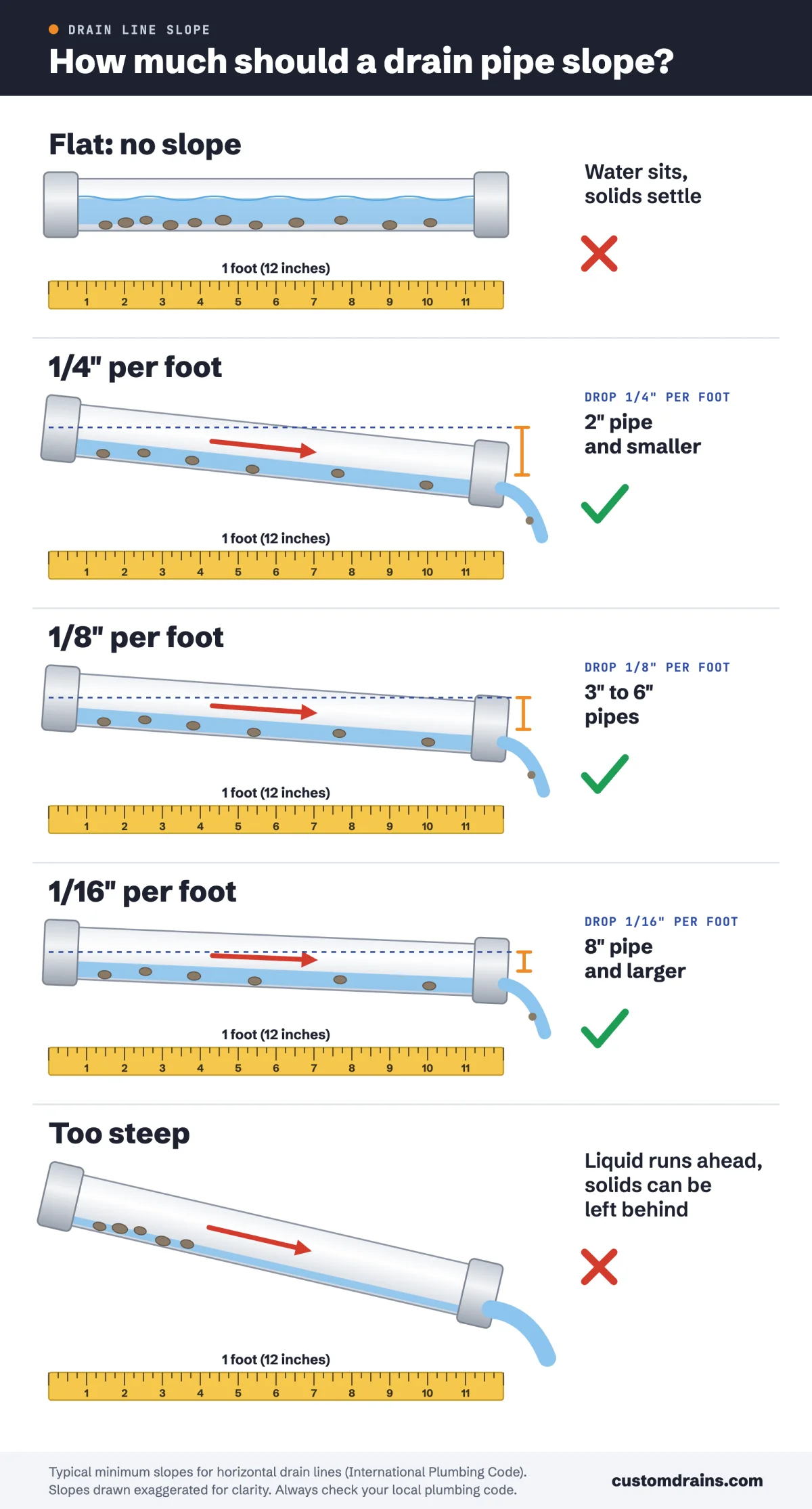
How much should a drain line slope?
After the trap, the drain line has to fall steadily so water and solids keep moving.
| Pipe size | Minimum slope |
|---|---|
| 2" and smaller | 1/4" per foot |
| 3" to 6" | 1/8" per foot |
| 8" and larger | 1/16" per foot |
Minimums for horizontal drain lines under the International Plumbing Code. A flat line lets water sit and solids settle; a very steep one lets liquid run ahead of the solids. Some states follow the Uniform Plumbing Code instead, so always check your local code.
Large inventory, fast shipping
Our stainless drain designs are true workhorses. We stock 12" stainless drains, cleanouts, P-traps, hub drains and laterals because, over the years, we've learned they're needed for new construction on a fast-track basis.