
- Home
- Industries
- Slaughter & rendering
Stainless Drains for Slaughter and Rendering Plants
In a new plant, drains are cast into the slab. Get them wrong and fixing them means cutting concrete around a running operation.

9 CFR 416.2 (USDA FSIS sanitation)
304; 316 where brine or chlorine residues sit
Drains are fixed before the pour
Plan Early
Trench frames, slopes, and outlets are set before the pour, and piping runs underneath. Changing them later means breaking out concrete while production and inspection continue. That's engineering reasoning, not a statistic, but anyone who has retrofitted a plant knows it.
The Rules
USDA sanitation rules (9 CFR 416.2) require adequate floor drainage, ventilation that controls odor and condensation, and separate rooms for edible and inedible product. Keep drain routing consistent with that separation, and confirm details with your engineer and FSIS contact.
What Goes Down the Drain
Wastewater varies a lot by plant. OSU Extension compiles cattle slaughter ranges of roughly 163 to 17,158 mg/L BOD, driven by blood, fat, and paunch. Dry-clean solids first, and remember fats can liquefy above about 38°C and slip past primary treatment.
Rendering is strong but low volume. An older Australian (CSIRO, 1997) sheet reports raw-material bin drainage with oil and grease up to 100,000 mg/L. Treat those as rough figures, and seal drains well to avoid odor paths.
Stainless: Fit and Limits
Stainless suits kill floors, offal rooms, and rendering receiving areas. It won't fix poor slope or undersized outlets, and brine or chlorine residues can pit even 316. Send us your chemistry and temperatures and we'll tell you honestly if it fits.
Our drains come standard in T304, with 316L available, and meet USDA and CFIA sanitary standards.
304 or 316? Check your chemistry
Tick what reaches your drains. This is a starting point, not a specification.
304 is often enough for general areas. Your engineer or quality team confirms. Tell us your chemistry and we'll help.
Full technical guide
Why Drains Are a Design-Phase Decision
On a kill floor, drains are part of the floor system, not an accessory. Trench frames, slopes, and outlets are set before the slab is poured, and piping runs beneath it. Changing them later means breaking out concrete, rerouting lines, and working around production and inspection. That is engineering reasoning, not a cited statistic, but anyone who has retrofitted a drain in an operating plant will recognize it. The practical lesson: settle drain layout, capacity, and material while the plan is still on paper.
What the Rules Say
USDA FSIS sanitation rules (9 CFR 416.2) require adequate floor drainage wherever floors face flooding-type cleaning, and ventilation adequate to control odors, vapors, and condensation. The same section requires rooms handling edible product to be separate and distinct from rooms handling inedible product, to the extent needed to prevent adulteration. Drain routing should respect that separation, so edible and inedible drain lines are not casually joined. Confirm details with your FSIS circuit contact and design engineer.
The Load Slaughter Puts on Drains
Wastewater varies widely between plants. Oklahoma State University Extension compiles published ranges for cattle slaughter wastewater of roughly 163 to 17,158 mg/L BOD and 540 to 22,300 mg/L total suspended solids, and for swine roughly 100 to 18,625 mg/L oils. The spread is the point: your plant's numbers depend on your practices. Blood, fat, and paunch contents drive the load, and the same source notes that separating them from the wastewater stream helps significantly.
Australian industry guidance adds practical points. Dry-clean manure and solids before washing, dump paunch dry, and screen stockyard and stock-wash effluent before it enters treatment. Fats can liquefy above about 38°C and then escape primary treatment, so water temperature affects what fat reaches your drains. That guidance also describes warm water near 43°C and hot water near 82°C as typical sanitation temperatures, so drains and outlets see real heat.
Rendering Is a Different Environment
Rendering plants handle raw material bins, cookers, presses, tallow, and blood processing. A 1997 CSIRO (Australian) information sheet reports bin drainage with chemical oxygen demand around 40,000 to 65,000 mg/L and oil and grease up to 100,000 mg/L. Where a renderer shares a site with an abattoir, it typically produces under 25 percent of the effluent volume but over 50 percent of the organic and nutrient load. High-temperature cooker condensate is much weaker, with oil and grease below 100 mg/L. Odor control draws on negative-pressure buildings and 20 to 30 air changes an hour. Your drains must also be trapped and sealed so they do not become odor paths. Treat these figures as order-of-magnitude, since they come from an older, non-U.S. document.
Where Stainless Steel Fits
Stainless steel suits kill floors, evisceration and chill areas, offal rooms, and rendering receiving areas where hot water and frequent cleaning demand durable, cleanable surfaces. It resists corrosion from blood, fats, and caustic cleaning far better than coated mild steel, and it keeps a smooth, non-porous surface. Heavy-duty frames can be specified for carts, forklifts, and loaded trucks.
Where It Has Limits
Stainless steel does not fix poor slope, undersized outlets, or a failed floor-to-drain joint. Brine, chlorine sanitizers, and warm chloride residues can pit even 316 under the wrong conditions, and welds need to be sound. Rendering streams combine heat, fats, ammonia, and cleaning chemistry, so review the actual chemistry rather than assuming. We will not claim stainless suits a stream until you have given us the numbers.
Specification checklist
Tick what your project needs. We'll add your list to the quote request so we can answer the right questions.
Common questions
Can drains be added after production begins?
Sometimes, but at much higher disruption. Plan early.
Can stainless handle rendering effluent?
It depends on temperature, chemistry, and exposure time. Send us the data.
Who should approve the design?
Your design engineer, your wastewater consultant, and your FSIS contact.
Sources and references
- 9 CFR 416.2, sanitation performance standards
- OSU Extension fact sheet FAPC-240, slaughterhouse wastewater
- AMPC wastewater guidance (Australia)
- CSIRO rendering environmental control sheet (Australia, 1997)
Regulations and standards change, and requirements vary by jurisdiction. Confirm current requirements with your engineer, regulator, and quality team.
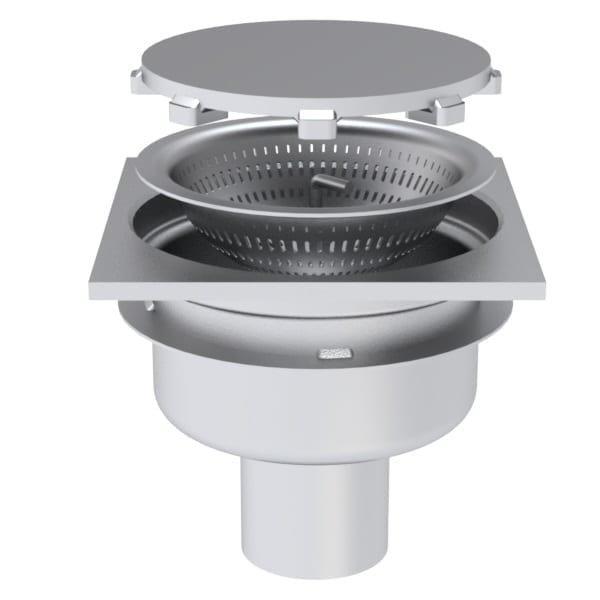
Drains often specified for slaughter & rendering


Specify Before the Slab Is Poured
Tell us your line, volumes, and washdown.