
- Home
- Industries
- Poultry processing
Stainless Drains for Chicken and Turkey Plants
Fat, feathers, and antimicrobial chemicals all end up on the floor.
9 CFR 416.2 (USDA FSIS sanitation)
304 or 316; check PAA concentration and contact time
PAA pooling and mixing in floor drains
The best floor drains for a poultry processing plant are seamless stainless steel drains: 304 for most areas, 316L where chlorides and sanitizers are harsh. Choose a removable basket, a cover that lifts out for cleaning, and a body rated for forklift traffic. Custom Drains has supplied stainless drainage to food plants across North America for more than 30 years.
The Short Version
USDA sanitation rules (9 CFR 416.2) require adequate floor drainage where floors get flooded during cleaning. Poultry wastewater carries blood, fat, skin, feathers, and offal, and fats clog fine screens.
Antimicrobials Hit the Floor
USDA FSIS notes peracetic acid (PAA) is used in spray cabinets, dip tanks, and chillers, and that discharge to the floor and chemicals mixing in floor drains can cause problems. It suggests closed drain lines from cabinets and a dedicated trough line. So plan separate drain connections at that equipment.
Trenches Get Overloaded
Industry sources say staff stuffing product into drains is a leading problem and can break the trap. Baskets, strainers, and training help. Keep the trench-to-concrete edge sealed, since gaps can harbor bacteria. Short washdown windows make drains that open fully and clean fast essential.
Stainless: Fit and Limits
It tolerates hot water, caustic and acid cycles, and constant wet. But PAA isn't harmless to it. A documented dairy case showed pitting at 304 welds where 0.5% PAA sat stagnant for weeks. Avoid stagnant chemical, check welds, and verify supplier claims against your own concentration and contact time.
Our drains come standard in T304, with 316L available, and meet USDA and CFIA sanitary standards.
304 or 316? Check your chemistry
Tick what reaches your drains. This is a starting point, not a specification.
316 resists chloride pitting better. No grade is immune: rinse with fresh water and avoid stagnant chemical. Your engineer or quality team confirms. Tell us your chemistry and we'll help.
PAA isn't harmless to stainless. A documented dairy case showed pitting at 304 welds where 0.5% PAA sat stagnant for weeks. Avoid stagnant chemical and check welds.
Full technical guide
What the Rules Say
USDA FSIS sanitation regulations (9 CFR Part 416) are issued under both the Federal Meat Inspection Act and the Poultry Products Inspection Act. Section 416.2 requires adequate floor drainage wherever floors face flooding-type cleaning or where normal operations release water or liquid waste. "Adequate" is yours to demonstrate, and inspectors judge the result.
What Goes Down a Poultry Drain
Poultry processing uses large volumes of water, and the wastewater carries blood, fat, skin, feathers, and offal, along with proteins and other organic matter. Water often transports feathers and offal away from the line. Fats and slimy particulates blind fine screens and clog piping, and processors usually track biochemical oxygen demand, suspended solids, and fats, oils, and grease because discharge limits apply downstream.
Antimicrobial Chemistry Reaches the Floor
FSIS describes peroxyacetic acid (PAA) as an antimicrobial used on carcasses, parts, trim, and organs through spray cabinets, dip tanks, hand sprays, and chillers. FSIS Directive 7120.1 lists approved uses, and approved in-use solutions range from 50 to 2,000 ppm. FSIS also flags solution discharged from cabinets and tanks onto the floor as an exposure concern. It notes that chemicals mixing in floor drains can cause problems, and suggests closed drain lines from cabinets and a dedicated floor-trough drain line to a safe discharge point. For drain design, that argues for planned, separate connections at antimicrobial equipment rather than open discharge to a shared floor drain.
How Poultry Plants Use and Misuse Trenches
Industry sources report that poultry processors often want trenches that collect unusable parts for feed and pet food. They also report that staff stuffing too much product into drains is a leading problem, and that it can break the p-trap. Small inedible pieces and heavy soils clog drains too. Baskets, strainers, and training reduce the problem, and a reliable sanitation program covers the rest.
One design engineer cautions that wide trench openings can develop gaps where the drain meets the concrete, and those gaps can harbor bacteria. Specify load-rated, properly anchored frames, and keep the floor-to-drain junction sealed.
Which Drain to Use in Each Part of the Plant
Match the basket, material, and outlet to what actually reaches the drain in each area. These are starting points; confirm final selections with your plant engineer.
| Area | What reaches the drain | What to specify |
|---|---|---|
| Receiving, kill, scald, defeathering | Blood, feathers, wash water, heavy solids | 316L if sanitizer exposure is high; large perforated basket; 4" to 6" outlet |
| Evisceration | Offal, fat, bone fragments, water | Removable basket for solids; cover that lifts out; 4" to 6" outlet |
| Chilling and giblet | High water volume, chlorine or peracetic acid | 316L stainless; large outlet for flow; seamless body |
| Further processing and cooking | Grease, breading, cleaning chemicals | 304 or 316L; basket that cleans fast; consider an attached trap |
| Packaging and cooler | Light wash-down water, condensation | 304 stainless; standard basket; 3" outlet is usually enough |
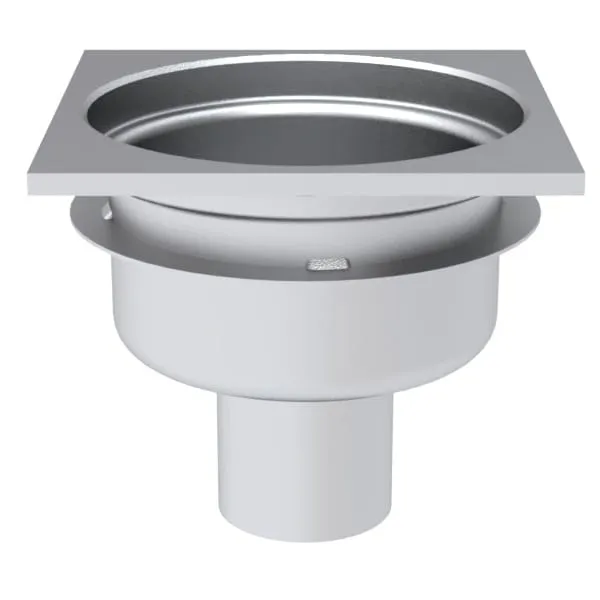
For heavy solids, a deep sump floor drain holds more before the basket needs emptying. For general wash-down areas, the square industrial floor drain is the usual choice.
304 or 316L Stainless for a Poultry Plant
Use T304 as the standard and step up to T316L where the floor sees chlorides, brines, or harsher chemistry. Both grades come with a 2B industrial finish, with PVC protection during assembly to prevent scratches.
| T304 | T316L | |
|---|---|---|
| Best for | General wash-down, packaging, coolers | Chill areas, brine, chloride exposure |
| Corrosion resistance | Good for most food plant conditions | Higher resistance to chlorides |
| Finish | 2B industrial | 2B industrial |
316L resists chlorides better, but it does not make a drain immune to peracetic acid. Concentration, pH, temperature, and stagnation still matter; see "Where It Has Limits" below and check your chemistry. If you are unsure, ask which sanitizers your sanitation crew uses and how often. That usually settles the choice.
Outlet Sizing and Drain Line Slope
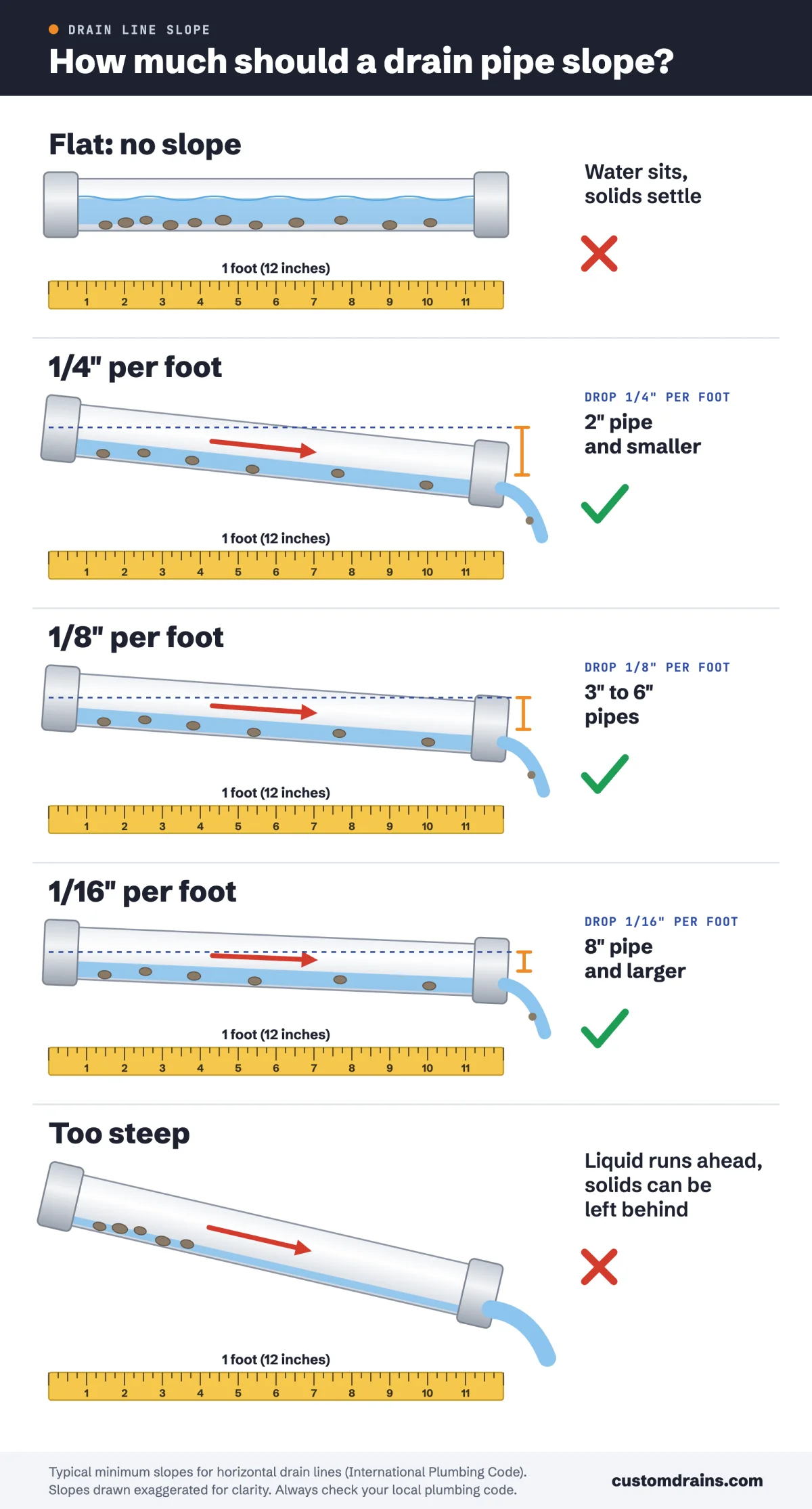
Outlets run from 3" to 8" as standard, with 2" available on request, in Schedule 10 pipe or Schedule 40 where specified. Size the outlet to the flow the area produces, then slope the line so water carries solids with it.
| Pipe size | Minimum slope |
|---|---|
| 2" and smaller | 1/4" per foot |
| 3" to 6" | 1/8" per foot |
| 8" and larger | 1/16" per foot |
Minimums for horizontal drain lines under the International Plumbing Code. A flat line lets water sit and solids settle; a very steep one lets liquid run ahead of the solids. Some states follow the Uniform Plumbing Code instead, so always check your local code.
Baskets, Covers, and Traps
The basket and cover do most of the daily work, so choose them for how your crew cleans.
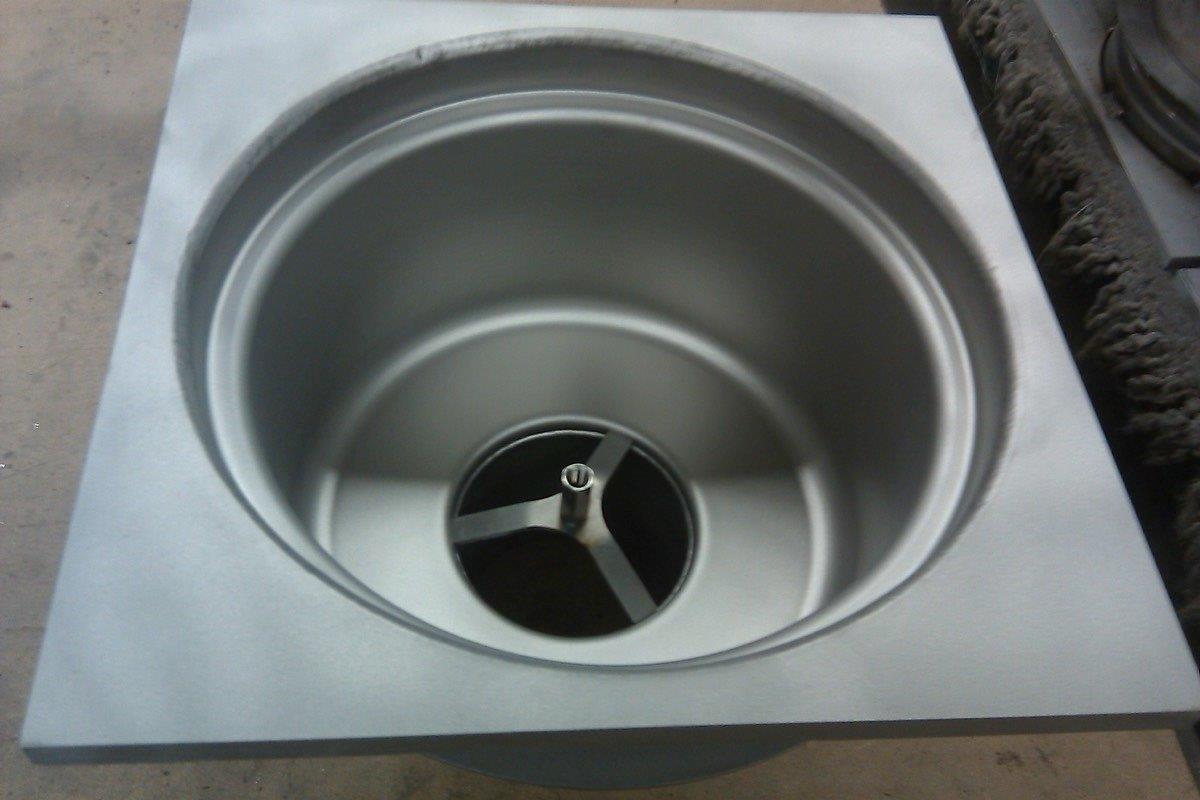
- Baskets. A perforated basket catches debris at the surface and lifts out by hand. Five basket styles are available; pick the one with the open area your solids need.
- Covers. The cover lifts out for cleaning. Nine cover styles are available, including solid, drilled, and a special-order locking cover.
- Traps. Add a P-trap where you need to block sewer gas and odors. A trap can come attached to the drain, or loose and connected with a FRENCO fitting.
Installation and Care
A good drain still fails if it is installed or maintained poorly. Keep these in mind:
- Set the top plate flush with the finished floor so water flows in and carts roll over without catching.
- Pitch the floor toward the drain and slope the outlet line to match the table above.
- Pour the slab around the concrete setting ring so the drain is locked in place.
- Lift out and empty baskets every shift, before solids pack down.
- Wash the cover, basket, and sump surfaces during each sanitation cycle.
- Rinse residue from the sump so fat and protein do not build up.
Built for Your Inspector
Custom Drains floor drains meet USDA, CFIA, and FDA sanitary standards. The features inspectors look for are built in:
- Seamless spun body. The 12 gauge T304 or T316L body is spun in one piece, so the body has no seam for residue to hide in.
- Heavy-duty construction. A 1/2" top plate and a 12 gauge concrete setting ring lock the drain into the slab. Drains are heavy traffic rated in accordance with ASME A112.6.3, with a 12,500 lb forklift rating.
- Easy to clean. The cover and basket lift out by hand, so crews can sanitize every surface.
For the exact requirements that apply to your plant, check with your plant engineer, your USDA or CFIA inspector, and your local plumbing authority.
Cleaning Under Time Pressure
Multiple daily shifts compress washdown windows. One article reports plants working to finish washdown in around four hours instead of eight to ten. A food-safety consultant quoted there recommends cleaning drains during the first rinse, sanitizing wet drains daily, and deep cleaning weekly. Drains that open easily and drain fully make that schedule realistic.
Where Stainless Steel Fits
Stainless steel gives poultry plants a smooth, non-porous surface that tolerates hot water, caustic and acid washdown cycles, and constant wet conditions. Radiused edges, removable grates, and sloped interiors support cleaning.
Where It Has Limits
Stainless steel is not immune to antimicrobial chemistry. Concentrated PAA is corrosive, and a documented dairy investigation found pitting at 304 stainless welds where 0.5 percent PAA at pH 4.4 sat stagnant for weeks, aggravated by poor welding. That case involved a coil, not a drain, and chloride was low. Take the lesson anyway. Avoid stagnant chemical, verify weld quality, and check supplier claims against your own concentration, pH, and contact time. Warm chloride solutions can also pit or crack stainless steel in any grade.
Specification checklist
Tick what your project needs. We'll add your list to the quote request so we can answer the right questions.
Common questions
Can stainless steel handle PAA?
It depends on concentration, pH, temperature, and stagnation. Share your chemistry and we will help you review it.
How do we keep staff from overloading drains?
Use baskets and strainers, plus training and clear housekeeping rules.
Does a drain need to be cleaned every shift?
Follow your sanitation program. Consultants cited here suggest daily sanitizing of wet drains and weekly deep cleaning.
What type of floor drain is best for a poultry processing plant?
A seamless stainless steel drain with a removable basket and a cover that lifts out for cleaning. Use T304 in most areas and T316L where chlorides or strong sanitizers are present.
Should I choose 304 or 316L stainless?
304 works for general wash-down, packaging, and cooler areas. 316L resists chlorides better, so it suits chill areas and brine exposure. Neither grade is immune to peracetic acid, so check your concentration and contact time.
What outlet size do I need?
Outlets run from 3" to 8" as standard, with 2" on request. Size the outlet to the flow of each area; chill and kill areas usually need the larger sizes.
How much slope should a drain pipe have?
Typical minimums under the International Plumbing Code are 1/4" per foot for 2" pipe and smaller, 1/8" per foot for 3" to 6", and 1/16" per foot for 8" and larger. Check your local code.
Can the drains handle forklift traffic?
Yes. Custom Drains floor drains have a 12,500 lb forklift rating and are heavy traffic rated in accordance with ASME A112.6.3.
Do you offer traps?
Yes. A P-trap can be attached to the drain, or supplied loose and connected with a FRENCO fitting.
Can you ship anywhere in North America?
Yes. We ship throughout the U.S. and Canada. Call 888-244-3417 for lead times and shipping.
Sources and references
- 9 CFR 416.2, sanitation performance standards
- FSIS Directive 7120.1 and FSIS guidance on peracetic acid
- Provisioner, "Food Safety: Tapping the Dangers"
- International Plumbing Code (ICC), Table 704.1, slope of horizontal drainage piping
Regulations and standards change, and requirements vary by jurisdiction. Confirm current requirements with your engineer, regulator, and quality team.
Drains often specified for poultry processing

Talk to Us About Your Plant
Tell us your line, your chemistry, and your washdown schedule.