
- Home
- Industries
- Chemical
Stainless Drains for Chemical Plants: Know the Limits
Stainless is great in many places and wrong in others. We'll help you tell which.

Your permits, EHS team, and EPA RCRA guidance
Depends on the chemical list
Hydrochloric and hydrofluoric acid
Start With the Chemistry
No drain material suits every chemical. Performance depends on concentration, temperature, and contamination. List every chemical that could reach the drain, spills and cleaners included, and review it with your engineer.
Where Stainless Often Works
- Washdown water and many mild cleaners
- Nitric acid (austenitic stainless is generally resistant)
- Utility, support, and warehouse areas
Our drains come standard in T304; 316L is available.
Where It Fails or Needs Caution
- Hydrochloric acid: 304 and 316 aren't resistant at any concentration.
- Sulfuric acid: Depends on concentration and temperature. Needs engineering review.
- Chlorides: Pitting and cracking can occur in both grades.
- Hydrofluoric acid: Common tables rate both as not resistant.
Containment Often Beats the Drain
A floor drain in a chemical area is a direct path to the sewer. Many facilities seal or plug drains there and rely on curbs, sumps, and secondary containment. EPA guidance treats drains and trenches that collect hazardous waste as part of the tank system. Check your permits and EHS team before adding one.
304 or 316? Check your chemistry
Tick what reaches your drains. This is a starting point, not a specification.
304 is often enough for general areas. Your engineer or quality team confirms. Tell us your chemistry and we'll help.
Full technical guide
Start With the Chemistry
No single drain material suits every chemical. Stainless steel resists many process fluids, washdown water, and cleaning agents, but its performance depends on concentration, temperature, aeration, and contamination. Before choosing a drain, list every chemical that could reach it, including spills and cleaning products, and review that list with your engineer or materials specialist.
Where Stainless Steel Often Performs Well
- Nitric acid, where austenitic stainless steels are generally resistant
- Washdown water and many mild cleaning agents
- Support, utility, and non-process areas
- General maintenance, packaging, and warehouse areas
Where It Fails or Needs Caution
- Hydrochloric acid: Types 304 and 316 are not considered resistant at any concentration.
- Sulfuric acid: Results swing widely with concentration and temperature. Prolonged contact with 304 or 316 is generally not advised, and short or intermittent contact needs engineering review.
- Chlorides: Pitting, crevice corrosion, and stress corrosion cracking can occur in both 304 and 316, especially in warm solutions and under residue.
- Hydrofluoric acid: Common compatibility tables rate both 304 and 316 as not resistant.
Where stainless is not the right material, options can include nickel-molybdenum alloys, lined systems, or non-metallic materials. Your engineer should choose among them.
Containment Often Matters More Than the Drain
A floor drain in a chemical area is a direct path to the sewer. For that reason, many facilities seal or remove drains in chemical storage and process areas and rely on curbs, sumps, and secondary containment instead. EPA guidance treats floor drains and trenches that collect hazardous waste as part of the tank system, subject to secondary containment requirements. Local rules commonly require containment sized to a share of the largest tank, often in the 100 to 150 percent range depending on the jurisdiction. Floor drains inside containment areas are often required to be plugged.
Where a Stainless Drain Fits
Stainless drains serve areas where the fluids are compatible, the discharge is permitted, and your environmental, health, and safety team approves the connection. That commonly means washdown areas, utility spaces, and non-hazardous support zones, not areas where incompatible or hazardous chemicals can reach the drain.
Specification checklist
Tick what your project needs. We'll add your list to the quote request so we can answer the right questions.
Common questions
Is 316 always better than 304 for chemicals?
No. It resists chlorides better, but neither grade handles hydrochloric acid, and both have limits in sulfuric acid.
Should a chemical storage room have a floor drain?
Often not. Many programs prohibit or seal drains there. Check your permits and EHS requirements.
Can you tell us if stainless is wrong for our process?
Yes. Send us the chemical list. If stainless steel is not the right fit, we will say so.
Sources and references
- EPA RCRA guidance on drains and trenches associated with tank systems
- Nickel Institute corrosion resistance references
- Municipal and laboratory floor-drain and containment guidance
Regulations and standards change, and requirements vary by jurisdiction. Confirm current requirements with your engineer, regulator, and quality team.
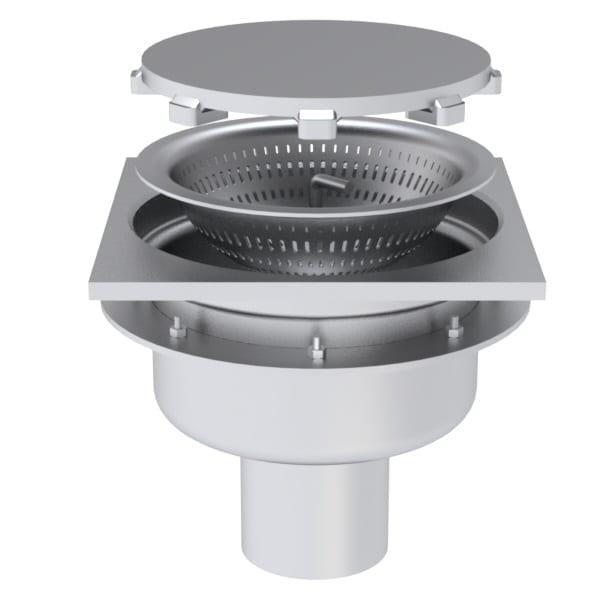
Drains often specified for chemical

Send Us Your Chemical List
Honest guidance beats a bad specification.